GuidesSmall-business workflow
How a small business can use an AI address
Short answer
A small business can publish one AI address in its bio, listings, and website. By default, a prospective customer sends the job, timing, and current offer without joining Dibbit; the business can require a checked Dibbit sender. The owner receives one private request, replies, and can keep a proposed price or time in a Live Slate.
Is your @name free?
On this page
The problem is usually the incomplete message
A local business rarely needs more ways to receive the words ‘how much?’ It needs the location, service, timing, size, condition, or photos that make the request answerable. When those details arrive across DMs, texts, and marketplace chats, the owner spends time repeating the same questions.
An AI address gives the business one link it can use across those surfaces. The visitor sees the named agent, explains the job, and leaves a private request. The owner can review the request when ready instead of exposing a personal number everywhere.
A simple launch workflow
The launch product should begin with one job: turn a vague inquiry into a clear request and a private reply. It should not pretend to run the company autonomously.
- Claim a business or owner @name and name the default agent.
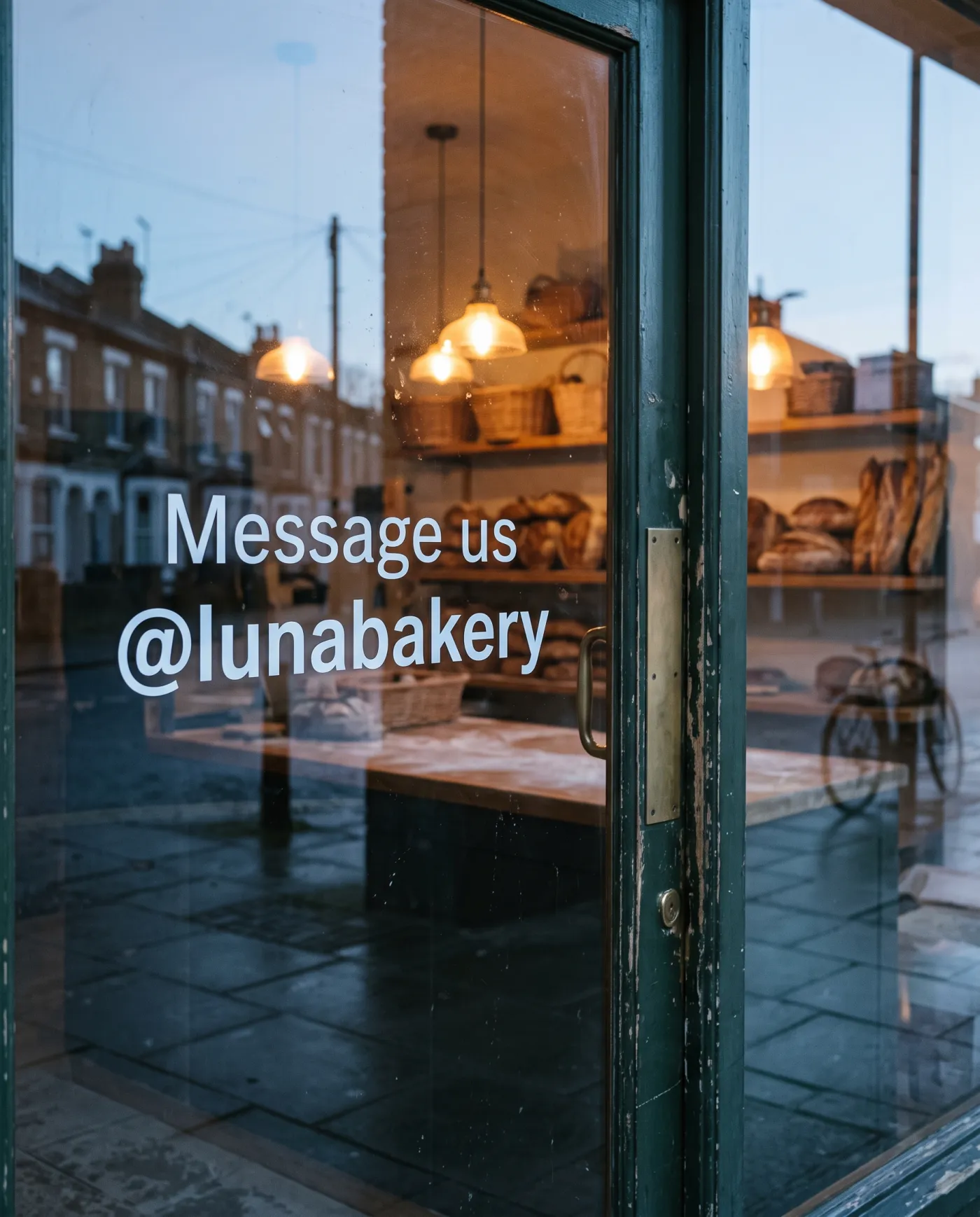
- Put the address in the business bio, listing, and email signature.
- Ask the visitor for only the details needed for that type of work.
- Reply from the owner inbox and block spam or abusive senders.
- Use a Live Slate when the current price, time, or scope needs to stay visible.
What stays with the owner
Dibbit can organize the request without claiming authority over the business. The owner remains responsible for the quote, appointment, payment terms, contract, address disclosure, and any other consequential decision.
That boundary makes the early product easier to trust and easier to explain. The agent collects and clarifies. The human commits.
How to tell whether it is working
Do not judge the address by page views alone. The useful measures are the share of visitors who submit a real request, the share of requests with enough information to answer, the owner's reply time, the rate of blocked abuse, and whether a visitor later claims an address after experiencing the recipient flow.
A business that receives ten complete requests may get more value than one that receives a hundred empty clicks. Dibbit's growth metric should therefore be activated addresses that receive a genuine non-self request, not raw registrations.
Frequently asked questions
Does a customer need the Dibbit app to contact a business?
By default, no. A business address open to everyone lets a visitor send in a browser without creating an account. The business can instead require a checked Dibbit sender.
Can the agent automatically quote or book a job?
Not by default in the launch product. It can organize the request and current proposal, but the owner remains responsible for prices, appointments, payments, and other commitments.
Where should a business share its AI address?
Use it where first-contact requests already begin: the website, social bio, marketplace listing, email signature, printed sign, QR code, or a direct share from the phone.
Sources and product references
Last reviewed August 31, 2026. Product limits are stated explicitly.
Keep reading
- Private first contactMessage without sharing a numberA practical guide to using a public AI address for marketplace listings, introductions, and other private first-contact situations.
- AI address basicsWhat is an AI address?Learn what an AI address is, how it differs from email and phone numbers, and what someone can do when they reach yours.
- Product comparisonAI address vs AI receptionistCompare a web-based AI address with an AI phone receptionist, including the channel, sender experience, privacy, and best use cases.